
On the other, it empowers tenants and organizations with seat management, room booking, and smart workspace planning tools.
From this dual perspective- between the building owner and the end user- POC is uniquely positioned to see the trends as they unfold in real time.
And the trend today is crystal clear: The market is returning to fixed workstations.
A Reversal in Office Trends
After years where hot desking and flexible layouts dominated workplace design, many organizations are rediscovering the value of stability and ownership — a personal, permanent space that restores a sense of belonging and allows for focused, efficient work.
Employees want a place they can call their own, and management now understands that the return to the office is not merely logistical — it’s strategic.
The Numbers Behind the Movement: RTO (Return to Office)
According to Pew Research, the share of employees required to work on-site rose from 63% to 75% between 2023 and 2024 — and the upward trend continued into 2025.
70% of companies now have formal RTO policies requiring partial weekly attendance.
A study by Archie found that fewer than 5% of organizations allow fully remote work — the vast majority demand regular in-office presence.
Gallup reports that hybrid models remain stable, but full in-office attendance is steadily increasing.
McKinsey emphasizes that it’s not just about policy — organizations must invest in culture, experience, and smart infrastructure to make the office a place employees want to return to.
The takeaway: this isn’t a passing trend — it’s a strategic shift toward a smarter, more human, and data-driven workplace.
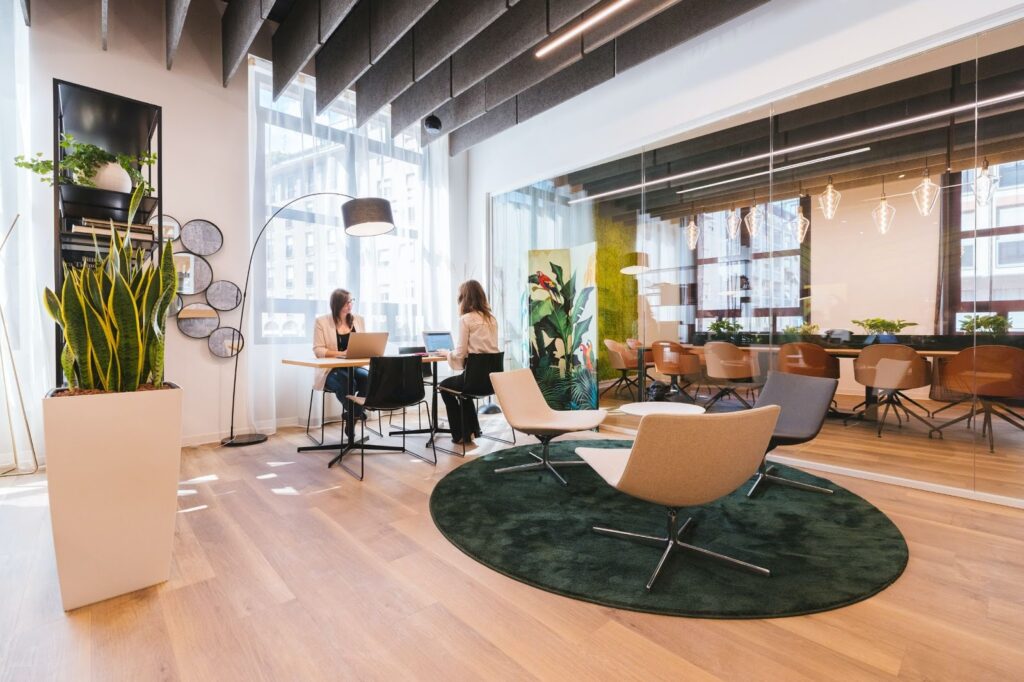
Why Fixed Workstations Are Making a Comeback
1️⃣ Belonging and Personal Ownership — Employees value having a personal, consistent space that feels “theirs.”
2️⃣ Time and Efficiency — No daily search for available desks; the workday starts immediately.
3️⃣ Privacy and Focus — Dedicated stations foster concentration and comfort in increasingly open office layouts.
4️⃣ Smarter Space Utilization — By balancing fixed and flexible seating, organizations design leaner, more efficient spaces.
5️⃣ Engagement and Commitment — A fixed desk carries symbolic value — a sense of stability, identity, and inclusion.
A Win–Win for Landlords and Tenants
For landlords:
Tenants no longer look for “just another office.” They want smart, modular, connected assets that adapt dynamically to organizational needs.
For organizations:
The goal is to bring people back — without friction, wasted space, or complexity.
The solution lies in intelligent planning, data-driven management, and platforms like POC System that enable visibility, control, and continuous optimization.
Test Fit — Understanding Before Designing
“Don’t sell space — understand what the organization truly needs.”
The Test Fit process has become a key tool in the commercial real estate world, allowing landlords and tenants to define needs before signing or building.
The stages include:
Needs assessment — identifying departments, work models, attendance frequency, mobile workers, and support spaces.
Planning scenarios — balancing fixed and flexible workstations, introducing modular layouts.
Simulation and analysis — translating user counts into square meters, evaluating flow, utilization, and “ghost desks.”
Implementation and follow-up — measuring post-occupancy performance and fine-tuning over time.
The result: optimized use of space, lower tenant costs, and a perfect fit between property and purpose.
How POC Connects Both Worlds
POC System operates at the intersection of real estate and workplace management, offering an integrated perspective:
For landlords: Space management dashboards, real-time occupancy analytics, and Test Fit simulation tools to elevate the tenant experience.
For tenants and organizations: Seat booking, room scheduling, real-time utilization tracking, and dynamic workspace planning — including Test Fit support.
Real estate companies are already adopting POC to present smarter, data-enabled assets,
while organizations use it to redefine how they manage space, seat employees, and plan their return to the office.

In Summary
The world is shifting from “where we work” to “how we work.”
Returning to fixed workstations isn’t a step backward — it’s a strategic redefinition of the modern workplace.
POC System bridges both worlds — the commercial real estate sector and the corporate workspace —
empowering each side to plan, measure, and manage smarter, more efficient, and more human environments.
Interested in learning more about our solutions and complementary services?
👉 sales@poc-system.com


